


 English

Heat Patch vs Heating Pad: The Short Answer
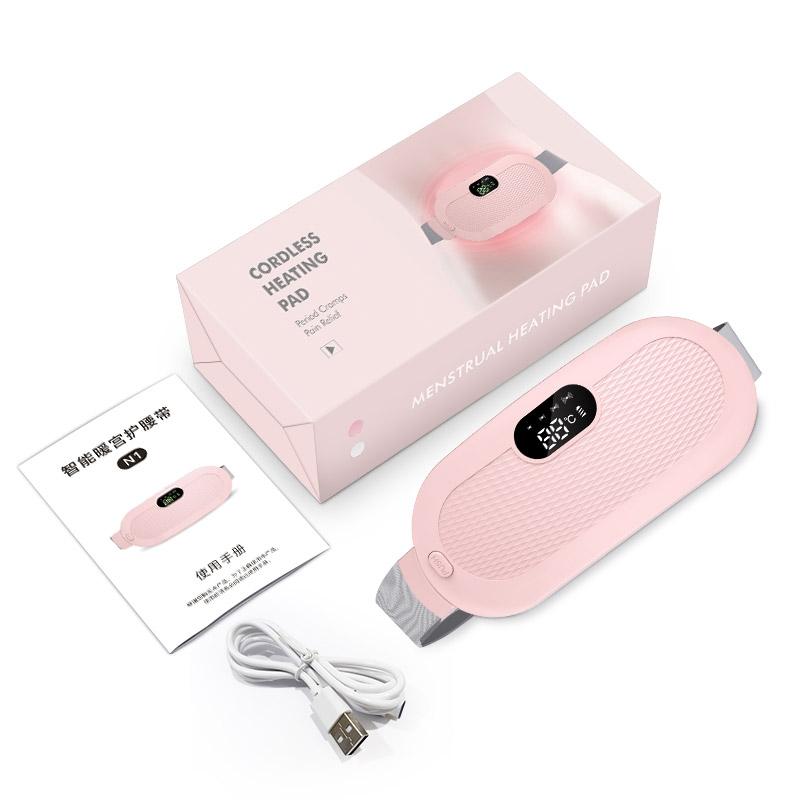
A rechargeable heating pad can be reused every cycle; a heat patch is worn once and thrown away.
A heat patch is a thin, air-activated pad you stick to the inside of your underwear. It warms to about 40°C for six to eight hours, then goes in the bin. A heating pad is a reusable device — usually a rechargeable belt — that you set to between 40°C and 60°C and wear again next month. The patch wins on discretion and zero charging; the pad wins on adjustable heat, reusability and cost per cycle.
Neither is universally better. Which one suits you depends on where the pain hits, where you are when it hits, and how often you need it. This comparison sets out the differences so you can pick the right format — for personal use or for a brand you are sourcing for.
How Each One Delivers Heat
How a Heat Patch Works
A heat patch contains iron powder, activated carbon, salt and water sealed in a porous pouch. When you open the outer wrapper, oxygen from the air reaches the iron and starts a slow oxidation reaction that releases heat. The temperature climbs to roughly 40°C within a few minutes and then holds fairly steady for six to eight hours. There is no switch and no dial: the patch gives you one temperature until it is spent.
How a Heating Pad Works
A rechargeable heating pad uses a PI or graphene heating film powered by a lithium battery, with an NTC thermistor holding the surface at the temperature you select. Most models offer four or five steps between 40°C and 60°C, an auto shut-off timer and often a vibration motor for light massage. A 1,800 mAh battery runs for two to four hours on a mid setting and recharges over USB-C in about three hours.
Heat Patch vs Heating Pad: Head to Head
| Heat patch | Heating pad | |
|---|---|---|
| Heat source | Air-activated iron oxidation | Rechargeable battery |
| Temperature | Fixed, about 40°C | Adjustable, 40–60°C |
| Duration | 6–8 hours, then discarded | 2–4 hours per charge |
| Reusable | No | Yes |
| Discretion | Very high — invisible under clothes | Moderate |
| Cost per use | About $0.50–1 each | Cents, after the initial purchase |
| Massage | None | Optional vibration |
| Sleep-safe | Yes | Only with auto shut-off |
When a Heat Patch Is the Better Choice
Heat patches for menstrual cramps make sense when the priority is to keep going without thinking about a device. A heating patch for cramps sits flat against the skin under clothing, so nobody can tell you are wearing one, and there is nothing to charge, switch on or remember to turn off. If you only need heat patches for cramps for a day or two a month, a box of period heat patches is the simplest option there is.
- You are at work, in class or travelling and need discreet, all-day warmth.
- Your cramps are mild to moderate and you do not need to change the temperature.
- You want heat while you sleep without a charging cable or a battery to manage.
- You only need coverage for a day or two per cycle.
A menstruation heat patch is also the simplest option to carry in a bag, which is why many people keep a couple of stick on heat patches or stick on heat pads as backup even when they own a device.
When a Heating Pad Is the Better Choice
A heating pad for period cramps is the better buy when you want control. You can turn the heat up when the pain peaks and down again when it eases, and you get the same device next month instead of buying refills. A rechargeable belt also stays in place while you move, so the warmth keeps hitting the right spot.
- Your cramps are strong enough that 40°C is not enough on its own.
- You get cramps every cycle and want to stop buying disposables.
- You want vibration massage as well as heat.
- You want an auto shut-off for safe overnight use.
Heat Pack, Heat Patch and Heating Pad — What Is the Difference?
The three terms get used loosely, so it is worth separating them. A heat pack is usually a reusable gel or grain pack you warm in a microwave, or a generic term for any heat source. A heat pack for cramps may be either a microwaveable pack or an air-activated one — and a menstrual heat pack sold as a heat pack for menstrual pain is usually just the air-activated patch described above. A heat patch is the disposable adhesive version. A heating pad is the electric, rechargeable or plug-in device. When you are shopping, check which of the three the listing actually means — a period pain heat pack and a period heat patch are not always the same product.
What Each Option Costs Over a Year
A heat patch costs roughly $0.50–1 per unit. If you use five to ten patches per cycle across twelve cycles, that is about $30–120 a year, every year. A rechargeable heating pad typically costs $20–40 once and then only the electricity to charge it, so it pays for itself within the first few cycles if your cramps are regular. The disposable heating pad format is convenient but it is the more expensive way to buy heat over time.
Safety Notes for Both Formats
- Heat patches: never apply one to broken or irritated skin, never wear two at once, never use a patch together with an electric pad or hot water bottle, and do not exceed the stated wear time.
- Heating pads: start on the lowest setting, keep sessions to about 20–30 minutes, and only sleep with a pad that has an auto shut-off. Reduced skin sensation (for example with diabetes or nerve damage) means you may not feel a burn developing — take extra care.
- Either way: heat is for comfort, not diagnosis. Pain that is severe, sudden or different from your usual pattern needs a doctor, not a warmer product.
A Quick Way to Decide
If you are still unsure, work through these four questions:
- Do you need heat outside the house? If yes, start with a heat patch. It is the only option that disappears under clothing.
- Is 40°C enough for your pain? If you regularly want more, you need an adjustable heating pad.
- Do you get cramps most months? If yes, the reusable pad is cheaper by the second or third cycle.
- Do you want massage as well as heat? Only a rechargeable pad offers vibration.
Many people end up with both: a heating pad for the worst days at home, and a small stock of patches for the days they have to be out. That combination covers almost every situation without over-buying either format.
Sourcing Heat Patches or Heating Pads for Your Brand
For brands and distributors the two formats lead to different supply chains. A heat patch is a high-volume consumable: low unit cost, simple private-label printing, and a reorder every month. A rechargeable heating pad is a higher-value durable device: more engineering, more customisation, and a compliance route that has to cover the battery and the electronics as well as the skin-contact materials.
If you are going the device route, ask the manufacturer for the full specification sheet — heating steps, battery capacity, charge time, net weight and carton configuration — plus a quality inspection report and a sample you can wear for a full day. You can review our warming belt and heat therapy devices or send your target market and quantity for a quote.
FAQ
Is a heat patch as effective as a heating pad?
For mild to moderate cramps, yes — a heat patch held at about 40°C gives the same kind of relief as a pad set to a similar temperature. A heating pad pulls ahead when you need higher heat, a longer session in one go, or massage, because the patch is fixed at one temperature.
How long do heat patches last?
Most menstruation heat patches are rated for six to eight hours of steady warmth. Once the iron powder is used up the patch stops producing heat and should be discarded.
Can you wear a heat patch all day?
Yes, within the manufacturer’s stated wear time — usually up to eight hours. Check the skin underneath when you remove it, and do not stack a second patch on the same spot.
Are heat patches safe to sleep in?
Air-activated patches are generally considered safe for overnight use because they hold a fixed, moderate temperature. A plug-in electric pad is not; a rechargeable pad only if it has an auto shut-off and is set low.
Do heating pads help period cramps?
Yes. Continuous low-level heat relaxes the uterine muscle and improves blood flow, and studies show it can reduce period pain to a similar degree as a standard dose of ibuprofen. Combining heat with a painkiller works better than either on its own.
How many heat patches do you need per period?
Most people use one or two a day on their heaviest days, so a box of five to ten covers a full cycle. If you find you are using more than that, a rechargeable heating pad will usually work out cheaper and give you adjustable heat as well.
Can you use a heat patch and a heating pad together?
No. Stacking two heat sources on the same area is the most common cause of heat burns. Use one format at a time and let the skin recover between sessions.
Conclusion
A heat patch is the discreet, no-charging, disposable option; a heating pad is the adjustable, reusable one that costs less the more you use it. If your cramps are mild and you are often out and about, keep a few heat patches for menstrual cramps on hand. If they are strong or regular, a rechargeable heating pad will serve you better every cycle. If you are sourcing either format for a brand, get in touch and we will help you choose the right one for your market.