


 English

Private label means you take an existing Derma Roller, put your brand on the handle and the packaging, and go to market without paying for tooling. OEM usually means the product is built to a specification you define but still from a platform the factory already owns. ODM means a new mold. Most first-time buyers who ask for "a custom derma roller" actually want private label, and knowing which of the three you need is what keeps the project cheap and fast. This guide covers the decision, the specification sheet to prepare, what genuinely drives cost and minimum order quantity, and the supplier checks worth running before a deposit leaves your account.
Private Label vs OEM vs ODM: Which One Do You Actually Need?
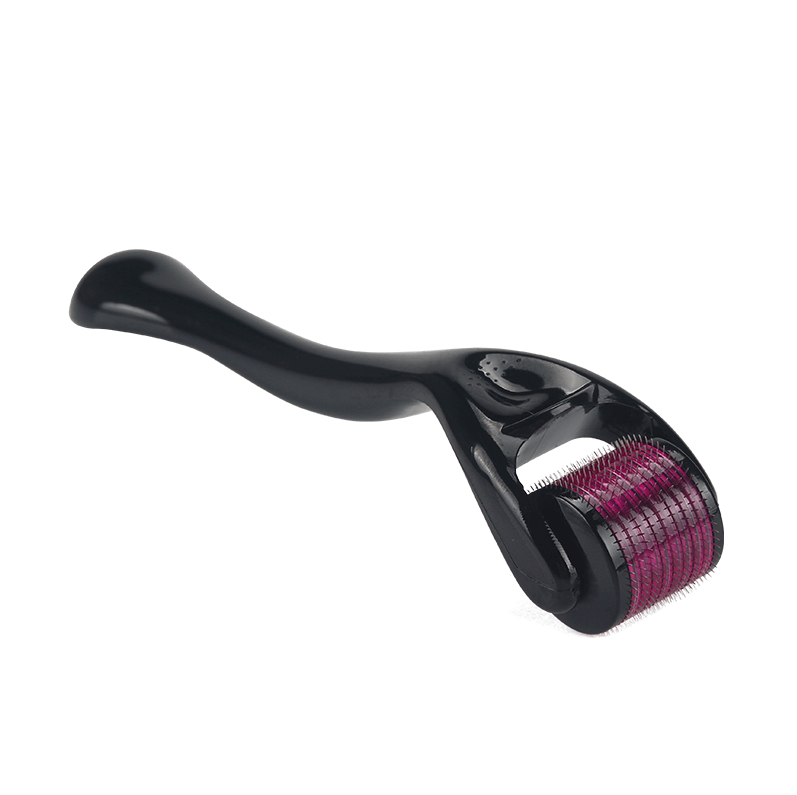
The three models differ in one thing: who owns the tooling. That single question determines your upfront cost, your lead time, and how much of your product is genuinely yours.
| Model | What is customized | Upfront cost | Best for |
|---|---|---|---|
| Private label | Logo, handle color, retail box, blister, leaflet, kit contents | Printing and packaging only | First launch, testing a market, small and mid-size brands |
| OEM | Needle count, needle length, roller width, handle material, packaging | Moderate — mostly specification and sampling | Established brands with a defined product brief |
| ODM | Everything, including a new housing or mechanism | Highest — mold and tooling investment | Brands with volume commitments and a defensible design |
A practical sequencing note: most successful roller brands start at private label, confirm which needle specifications actually sell, and only then move to OEM for the SKUs that earn it. Paying for tooling before you know your best-selling depth is the most common way to waste a product development budget.
The Specification Sheet to Prepare Before You Ask for a Quote
A factory cannot quote a derma roller without these parameters. Preparing them in advance turns a week of back-and-forth into a single exchange, and it is also the fastest way to tell whether a supplier actually manufactures or is passing your brief to someone else.
| Parameter | Common options | Why it matters |
|---|---|---|
| Needle length | 0.2 / 0.25 / 0.3 / 0.5 / 0.75 / 1.0 / 1.5 mm | Drives the treatment claim on your packaging and the regulatory route in some markets |
| Needle count per head | Typically 20 for a standard drum, with higher counts for facial models | Affects coverage per pass and how the product is positioned to professionals |
| Needle material | Titanium alloy or stainless steel | A headline claim on the box and a genuine difference in wear behaviour |
| Roller width and body size | Facial models run smaller than body models — roughly 75 mm and 135 mm body lengths in our range | Determines the SKU split between face and body lines |
| Handle material and finish | ABS with matte, gloss or metallic finish; color matched to your brand | The single most visible brand differentiator at retail |
| Protective cap | PC protective cap supplied as standard | Hygiene perception and shelf presentation |
| Retail packaging | Color box, blister, tube, kit configuration | Usually the largest cost lever after order quantity |
If you are still deciding on needle lengths, the existing guides on how long the needles should be on a derma roller and whether a needle roller is good for skin cover the consumer-facing side of that decision, which is usually the right starting point before writing a brief.
What Can Be Customized on a Private Label Derma Roller
Private label is often undersold. Even without new tooling, there is more surface area for your brand than most buyers expect:
- Handle branding — pad printing, silkscreen or laser marking on the handle body
- Color matching — handle and cap colors set to a Pantone reference so the range looks like one family
- Retail box — your artwork, your claims, your barcode, with the structure chosen to suit your channel
- Inner packaging — blister or tray, protective cap, and a leaflet in the language of your market
- Kit configuration — roller plus storage case plus sanitizing accessories, which raises average order value without changing the device
- Instructions and warnings — critical for markets that require specific wording on the insert
What private label does not change is the needle assembly itself. If your product claim depends on a needle specification nobody else offers, you are in OEM territory and should brief the factory accordingly. Derma roller OEM packaging decisions — box structure, insert language and unit count per carton — affect both your landed cost and how the product reads on a shelf, so settle them before you ask for a price. Our derma roller and microneedle roller platforms both accept custom needle counts and lengths under an OEM brief, while the standard dermaroller configuration is the usual starting point for private label.
What Drives Derma Roller Private Label Cost and MOQ
Buyers usually ask for a unit price first and are surprised when the same product is quoted at very different numbers. The unit price is a function of five variables, and only one of them is the roller itself.
| Cost driver | How it moves the price | How to control it |
|---|---|---|
| Order quantity | The strongest single factor — setup and printing costs are spread over the run | Consolidate SKUs into one order instead of splitting into small batches |
| Packaging structure | A custom die-cut box costs more than a standard tuck box of similar size | Start from a standard box size and print your artwork on it |
| Needle specification | Higher counts and longer needles add material and yield loss | Keep the launch range to two or three depths |
| Sterilization and packing method | Individually sealed units cost more than bulk-packed units | Match the method to your market requirement rather than defaulting to the most expensive option |
| Carton and freight profile | A smaller inner box means more units per carton and lower freight per unit | Ask for the carton dimensions and quantity per carton before quoting freight |
MOQ is set by the same logic: it is the quantity at which printing plates, packaging and production changeover stop being disproportionate. Because that threshold depends on the packaging structure and the number of SKUs rather than on the roller, an accurate derma roller MOQ requires your packaging decision — which is why sending artwork and a box preference with your brief gets you a realistic number on the first reply instead of a placeholder. Ask for the MOQ to be quoted per packaging option rather than as a single figure, so you can see what each route actually costs at your volume.
Choosing a Derma Roller Manufacturer: Checks Before You Pay a Deposit
derma rollers are simple enough that almost anyone can quote them and difficult enough that quality varies widely. These checks are what to run against any custom derma roller supplier before money moves: they separate a manufacturer from a reseller, and a reliable repeat run from a one-off shipment.
| Check | What to ask for |
|---|---|
| Manufacturer or trader | Factory address, production photos or a live video call of the assembly line, and confirmation of which steps are done in-house |
| Needle quality control | How needle straightness, tip condition and drum alignment are checked, and what the rejection criteria are |
| Documentation | A quality inspection report you can read, plus the certification documents your target market requires — ask for the documents, not a screenshot of them |
| Pre-production sample | A sample made with your artwork and your needle specification, approved before mass production begins |
| Specification lock | Written confirmation of needle count, depth and material per SKU, so a later shipment can be compared against it |
| IP and confidentiality | An NDA before you send artwork or a new design brief, especially for OEM and ODM projects |
One more point on scope: if your range includes both a roller and a pen, sourcing them from the same factory simplifies cartridge compatibility and lets you build combined kits. Our skin roller needle range, the facial microneedle roller line and the nano pen platform are produced in the same facility, which is why we can quote a roller-plus-cartridge bundle as one project.
Frequently Asked Questions
What is the minimum order quantity for a private label derma roller?
It depends on your packaging choice and how many SKUs are in the order, because those determine the printing and setup share. Send your box preference, artwork status and SKU list and we will confirm the threshold for your specific project rather than quoting a generic figure.
How long does private label production take?
The timeline is driven by artwork approval and packaging, not by the roller assembly. Allow time for a pre-production sample approval before the bulk run — approving that sample is what prevents a shipment of the wrong color or the wrong needle count.
Can I put my logo on the roller handle?
Yes. Handle marking is standard for private label orders and can be combined with a color match so the handle, cap and box read as one product. Send your artwork as vector files and specify the print area you want.
Do I need a custom mold to start?
No. A custom mold is only justified when your design differs mechanically from existing platforms or your volume supports the tooling investment. Most first orders are better served by private label or OEM on an existing platform.
Which needle length should I launch with?
For a consumer-facing launch, start with the shorter end of the range and add longer depths once you understand your buyers. Depth claims affect both your packaging text and, in some markets, how the product is classified — check the requirement for your territory before printing.
Start Your Private Label Project with Ruige
Huizhou Ruige Electromechanical Technology is an OEM/ODM manufacturer of beauty and personal care devices, with in-house R&D and production in the Pearl River Delta. We build derma rollers and Microneedle Rollers to your needle specification, handle your handle branding, retail box and leaflet, and supply the matching cartridges and pen platforms if your range needs them. If your brief covers both beauty devices and the micro-motors inside them, that is a single supplier conversation rather than two.
Next step: send your needle count, depth range, handle color, packaging requirement and target volume to lavender@xiangnaierelectromechanical.com, or submit the brief through our contact page. We will reply with a specification confirmation, sample lead time and quotation.