


 English

Industrial fans are widely used in ventilation systems, cooling equipment, factories, warehouses, and industrial machines. As the core power component of a fan system, the motor directly affects airflow performance, energy consumption, and equipment reliability.
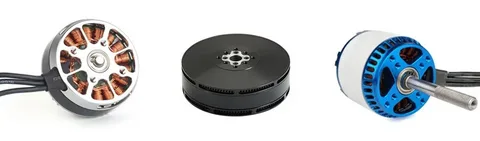
When an existing fan motor becomes noisy, inefficient, or requires frequent maintenance, replacing it with a Brushless Motorcan be an effective upgrade solution.
Compared with traditional brushed motors, a brushless motor provides longer service life, lower maintenance requirements, higher efficiency, and more accurate speed control. These advantages make Bldc Motorsincreasingly popular in industrial fan applications.
Why Replace an Industrial Fan Motor with a Brushless Motor?
Many industrial ventilation systems still use traditional motors. However, after long-term operation, problems such as carbon brush wear, increased noise, overheating, and unstable speed may affect the performance of industrial fans.
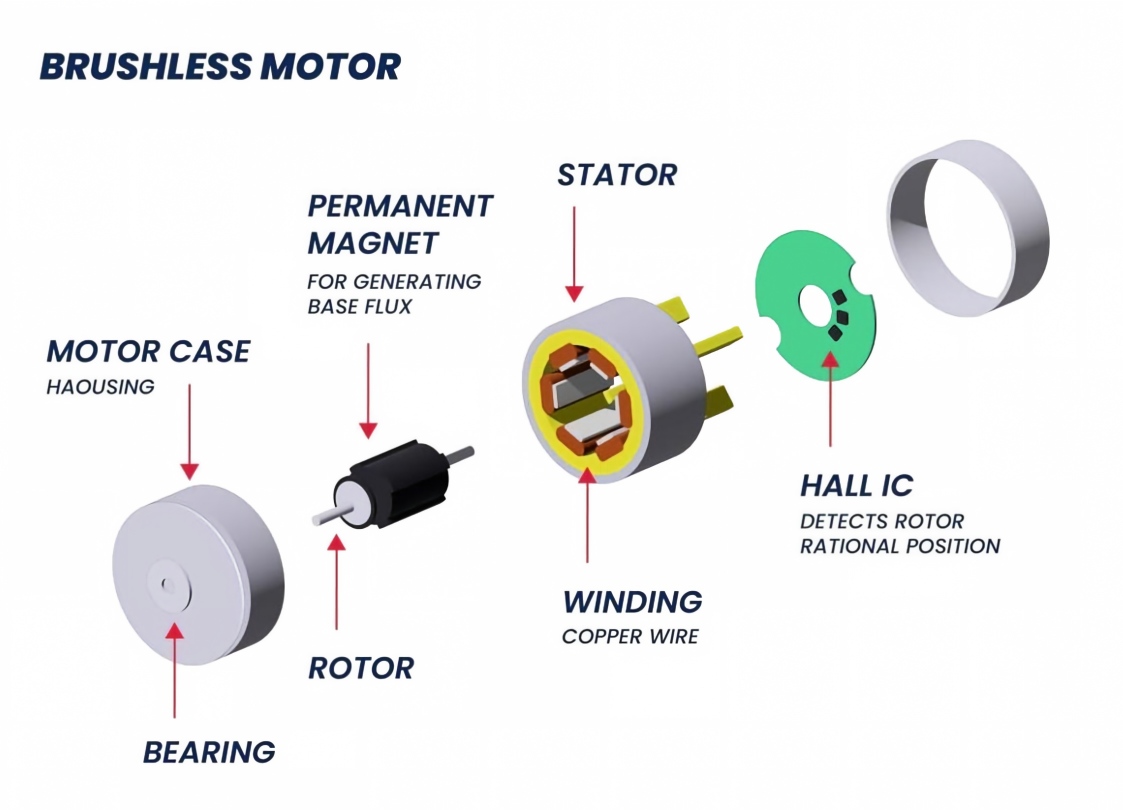
A Brushless Dc Motor (bldc motor) uses electronic commutation instead of mechanical brushes. The controller switches current electronically to generate a rotating magnetic field, allowing the motor rotor to operate efficiently.
You can learn more about the basic working principle of brushless DC motors from
this technical overview of BLDC motors.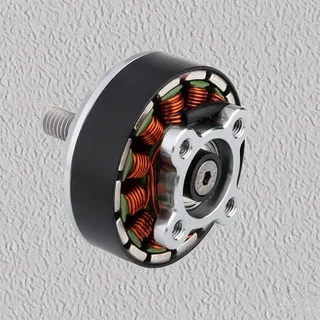
Advantages of Using a Brushless Motor for Industrial Fans
1. Longer Motor Service Life
The biggest difference between brushed and brushless motors is the absence of carbon brushes. Traditional motors require brush replacement after continuous operation because mechanical contact creates friction and wear.
A brushless motor eliminates this wear point, making it suitable for applications that require:
24/7 continuous operation
Industrial ventilation systems
Cooling equipment
Automatic machinery
2. Improved Energy Efficiency
Industrial fans often operate for many hours every day. Even small improvements in motor efficiency can reduce long-term operating costs.
A high-efficiency brushless motor can provide:
Lower power consumption
Reduced heat generation
Better energy conversion efficiency
More stable operation
3. Precise Speed Control
Many industrial applications require adjustable airflow according to different working conditions.
With electronic control technology, brushless motors can achieve:
Variable speed adjustment
Stable RPM control
Smooth startup performance
Accurate airflow management
Steps to Replace an Industrial Fan Motor with a Brushless Motor
Step 1: Check the Existing Industrial Fan Motor Specifications
Before purchasing a replacement motor, it is important to collect the specifications of the original motor.
The key parameters include:
Rated voltage
Power rating
Operating speed (RPM)
Torque requirement
Motor dimensions
Shaft diameter
Mounting structure
Matching these specifications ensures that the new brushless motor can provide similar or better performance.
Step 2: Select the Correct Motor Voltage
Voltage compatibility is one of the most important factors when choosing a replacement motor.
Common brushless motor voltage options include:
12V brushless motor
24V brushless motor
36V brushless motor
48V brushless motor
Customized voltage solutions
Using an incorrect voltage may lead to overheating, unstable operation, or reduced motor lifespan.
Step 3: Match Speed and Torque Requirements
The motor speed determines fan rotation speed, while torque determines whether the motor can start and maintain stable operation.
When selecting a replacement brushless motor, consider:
Fan blade size
Airflow requirements
Operating load
Noise requirements
A properly matched motor ensures efficient airflow performance without unnecessary energy consumption.
Step 4: Confirm Installation Dimensions
Even when electrical specifications match, mechanical compatibility is also important.
Check:
Motor diameter
Motor length
Shaft size
Mounting holes
Cable position
For equipment manufacturers, a custom brushless motor solutioncan simplify installation and improve system performance.
Applications of Brushless Motors in Industrial Fans
Industrial Cooling Equipment
Brushless motors are commonly used in cooling fans for:
Control cabinets
CNC machines
Industrial equipment
Electronic systems
HVAC and Ventilation Systems
Energy-efficient brushless motors are widely applied in:
Ventilation fans
Air circulation systems
Air purification equipment
Data Center Cooling
Modern data centers require reliable cooling solutions. Brushless motors help cooling fans achieve:
Continuous operation
Lower maintenance frequency
Stable airflow control
Common Mistakes When Replacing an Industrial Fan Motor
Only Considering Motor Power
Motor power is important, but it is not the only factor. Speed, torque, dimensions, and controller compatibility must also be considered.
Ignoring the Motor Controller
Unlike brushed motors, brushless motors require electronic controllers. The controller should match the motor voltage, current, and control method.
Choosing the Wrong Motor Type
Different industrial fan applications may require different motor structures, including:
Inner rotor brushless motors
Outer rotor brushless motors
Customized BLDC motors
Why Choose a Customized Brushless Motor Manufacturer?
For industrial fan manufacturers and equipment suppliers, standard motors may not always meet specific application requirements.
A professional brushless motor manufacturer can provide customization options such as:
Customized voltage
Customized speed and torque
Shaft modification
Connector customization
OEM production support
Working with an experienced supplier helps customers develop reliable motor solutions with better compatibility and long-term performance.
Conclusion
Replacing an industrial fan motor with a brushless motor is an effective way to improve energy efficiency, reduce maintenance costs, and extend equipment service life.
Before making a replacement decision, customers should evaluate voltage, speed, torque, installation size, and operating conditions.
For industrial equipment manufacturers looking for reliable motor upgrades, choosing the right brushless motor suppliercan provide better performance and long-term value.