


 English

A Brushless Motor, also known as a Brushless Dc Motor (Bldc Motor), operates without the brushes and mechanical commutator used in traditional DC motors. Instead, it relies on an electronic controller to switch the current between stator windings, creating a rotating magnetic field that drives the permanent magnet rotor. This design offers higher efficiency, lower maintenance, longer service life, and more precise speed control, making brushless motors the preferred choice for industrial automation, robotics, medical devices, and electric vehicles.
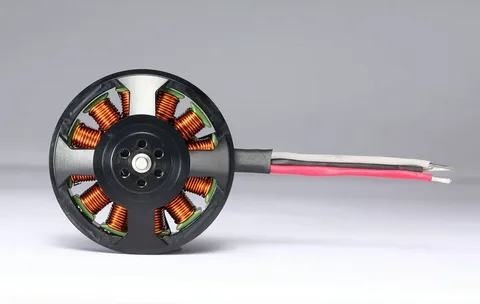
Main Components of a Brushless Motor
Stator: The stationary part of the motor containing multiple copper windings that generate a magnetic field.
Rotor: The rotating component equipped with high-performance permanent magnets.
Electronic Controller (ESC or Motor Driver): Controls the timing and sequence of current supplied to the stator windings.
Hall Sensors or Sensorless Feedback: Detect or estimate the rotor position so the controller knows when to switch the current.
How Does a Brushless Motor Work Step by Step?
Step 1: DC Power is Supplied
The brushless motor receives DC power from a battery or power supply. The electronic controller regulates this power before sending it to the stator windings.
Step 2: The Controller Energizes the Stator Windings
Instead of using brushes to reverse the current, the controller electronically energizes different stator coils in a specific sequence. This creates a rotating magnetic field around the stator.
Step 3: The Rotor Follows the Magnetic Field
The permanent magnets mounted on the rotor are attracted to the rotating magnetic field generated by the stator. As the magnetic field continuously changes direction, the rotor rotates synchronously with it.
Step 4: Continuous Electronic Commutation
The controller continuously monitors the rotor position using Hall sensors or sensorless algorithms. It then switches the energized windings at precisely the right moment, allowing the magnetic field to rotate continuously and keeping the motor running smoothly.
Brushless Motor Working Principle Diagram
DC Power Supply│▼Electronic Controller │▼Sequentially EnergizesStator Windings│▼Creates Rotating Magnetic Field │▼Permanent Magnet Rotor Rotates│▼Continuous Smooth Rotation
Why Brushless Motors Do Not Need Brushes
Traditional brushed DC motors use carbon brushes and a commutator to mechanically switch the current flowing through the rotor. These components wear over time due to friction, resulting in maintenance requirements and reduced efficiency.
Brushless motors eliminate these mechanical parts entirely. Electronic commutation replaces physical contact, reducing wear, minimizing electrical noise, and significantly extending motor lifespan.
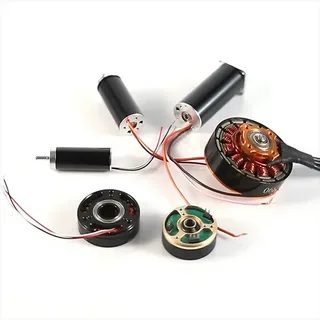
Advantages of Brushless Motors
| Feature | Brushless Motor | Brushed Motor |
|---|---|---|
| Efficiency | 85%–95% | 70%–80% |
| Maintenance | Very Low | Regular Brush Replacement |
| Service Life | Long | Shorter |
| Noise | Low | Higher |
| Speed Control | Highly Precise | Less Accurate |
| Reliability | Excellent | Moderate |
Common Applications of Brushless Motors
Due to their high efficiency, compact design, and reliable performance, brushless motors are widely used in numerous industries, including:
Industrial automation systems
Collaborative robots and industrial robots
CNC machine tools
Medical equipment
Electric vehicles (EVs)
Automated Guided Vehicles (AGVs)
Drones and UAVs
HVAC fans and blowers
Water pumps
Power tools
Household appliances
Packaging and semiconductor equipment
Conclusion
A brushless motor works by electronically controlling the current supplied to the stator windings, creating a continuously rotating magnetic field that drives the permanent magnet rotor. Without brushes or a mechanical commutator, brushless motors deliver superior efficiency, lower maintenance costs, quieter operation, and a significantly longer service life. These advantages have made bldc motors the preferred solution for modern industrial automation and high-performance motion control applications.