


 English

Why More Equipment Manufacturers Are Switching from Brushed Motors to Brushless Motors
For decades, brushed DC motors have powered countless industrial machines, consumer products, and automation systems. However, as manufacturers continue pursuing higher efficiency, longer service life, and lower maintenance costs, a significant shift is taking place across multiple industries.
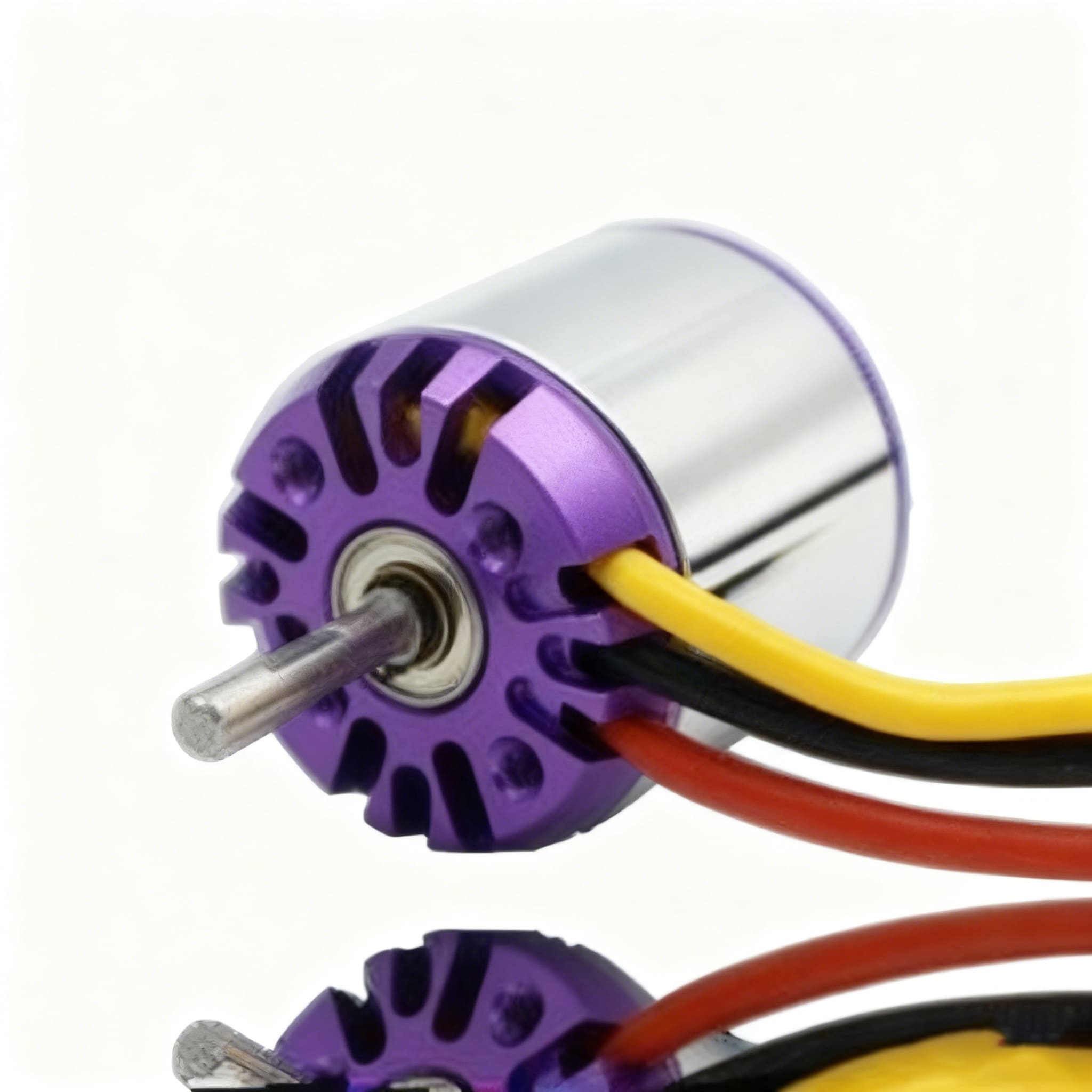
Today, brushless motors are becoming the preferred choice for equipment manufacturers developing next-generation industrial automation systems, robotics, medical devices, intelligent appliances, and precision machinery.
As the owner of Xiangnaier Electromechanical, I have witnessed this transition firsthand. More OEM customers are requesting brushless motor solutions not only because of performance improvements, but also because brushless technology helps reduce total operating costs over the entire product lifecycle.
What Is a Brushless Motor?
A Brushless Dc Motor (Bldc Motor) uses electronic commutation instead of traditional carbon brushes and mechanical commutators. By replacing physical brush contact with electronic controllers, brushless motors achieve smoother operation, higher efficiency, and significantly reduced wear.
Unlike conventional brushed motors, brushless motors generate less friction and eliminate brush-related maintenance issues, making them ideal for applications requiring long-term reliability and continuous operation.
Higher energy efficiency
Longer service life
Lower maintenance requirements
Reduced operating noise
Higher power density
Better speed and torque control
Why Are Manufacturers Moving Away from Brushed Motors?
Many equipment manufacturers originally selected brushed motors because of their simple structure and lower initial cost. However, as production equipment becomes more sophisticated, the limitations of brushed motors become increasingly apparent.
| Performance Factor | Brushed Motor | Brushless Motor |
|---|---|---|
| Maintenance | Regular brush replacement | Minimal maintenance |
| Efficiency | Medium | High |
| Operating Life | Limited by brush wear | Much longer |
| Noise Level | Higher | Lower |
| Speed Control | Basic | Precise |
| Automation Compatibility | Limited | Excellent |
The shift toward Industry 4.0 and intelligent manufacturing is accelerating the adoption of brushless motor technology across virtually every industrial sector.
Industrial Automation Is Driving Demand
Modern automation systems require motors capable of operating continuously with high precision and minimal downtime.
Brushless motors are now widely used in:
Industrial robots
Automated assembly equipment
Packaging machinery
CNC machine tools
Automated guided vehicles (AGV)
Warehouse automation systems
Industrial automation applications increasingly rely on brushless motor technology because of its superior speed control, energy efficiency, and reliability.
Why Robotics Companies Prefer Brushless Motors
Robotics manufacturers face unique challenges. Motors must deliver accurate positioning, rapid response, and stable torque output while maintaining compact dimensions.
Brushless motors excel in robotics because they provide:
High torque-to-weight ratio
Smooth motion control
Fast acceleration and deceleration
Low heat generation
Long operational life
Recent research in robotic motion systems continues to highlight brushless motor technology as a key driver of efficiency and control performance.
Medical Equipment Demands Reliability
Medical devices operate under strict reliability requirements. Equipment failures can result in costly downtime and operational risks.
Brushless motors are commonly found in:
Medical pumps
Diagnostic equipment
Surgical devices
Portable healthcare equipment
Laboratory automation systems
Their low maintenance requirements and precise speed control make them highly suitable for healthcare applications.
Smart Devices Require Energy-Efficient Motion Solutions
As smart appliances and connected devices become more advanced, energy efficiency has become a critical purchasing factor.
Brushless motors help manufacturers reduce energy consumption while improving user experience through quieter operation and longer product lifespan.
Applications include:
Smart home systems
Air purification equipment
HVAC systems
Smart fans
Intelligent consumer electronics
Custom Brushless Motors Are Becoming the New Standard
One of the biggest industry trends is customization.
Instead of selecting standard motors, many OEM manufacturers now require:
Custom shaft configurations
Special voltage requirements
Integrated encoders
Customized speed ranges
Application-specific torque output
Compact installation designs
This is why motor manufacturers increasingly provide customized brushless motor development services tailored to specific industry requirements.
Why Choose Xiangnaier Electromechanical?
At Xiangnaier Electromechanical, we focus on delivering high-performance motor solutions designed for modern industrial applications.
Our product portfolio includes:
Brushless Motors
DC Motors
Gear Motors
Custom Motor Solutions
Industrial Automation Motors
Useful Links:
Final Thoughts
The transition from brushed motors to brushless motors is no longer limited to high-end equipment. Across automation, robotics, healthcare, and smart devices, manufacturers are increasingly choosing BLDC technology to improve efficiency, reliability, and long-term value.
As global demand for intelligent equipment continues growing, brushless motors will remain at the center of modern motion control solutions.